
Container Transportation in Egypt: A Practical Guide for Factories and Companies
A practical guide to container transportation in Egypt for factories and companies, covering port pickup, customs release, 20ft and 40ft containers, factory delivery, empty return, common mistakes, and the key factors that affect transport planning and cost.
Tranzita Editorial Team
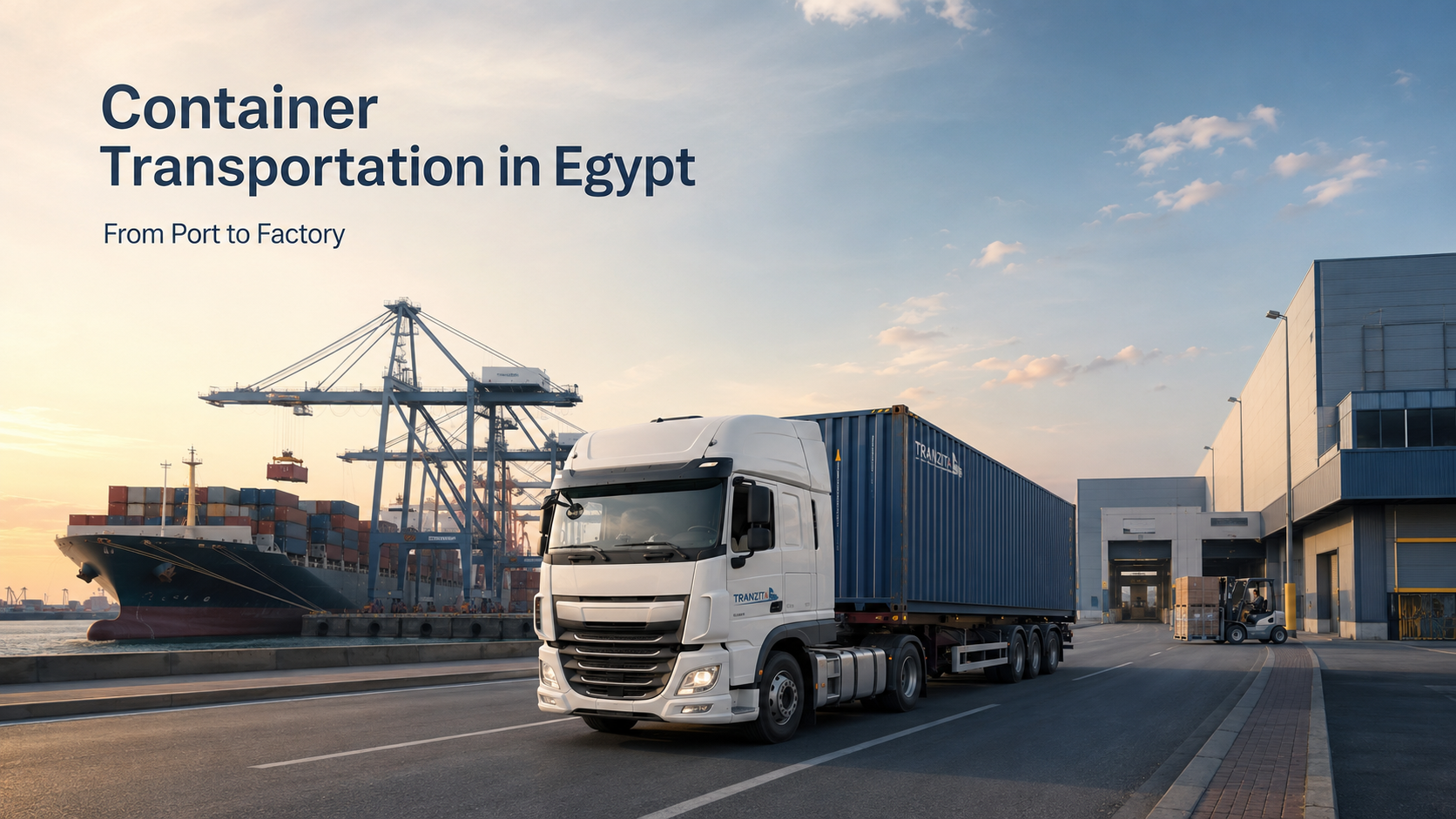
Container Transportation in Egypt: A Practical Guide for Factories and Companies
When a container docks at an Egyptian port, your import shipment is not finished.
The next step starts right after discharge.
Now the container must move to your site, such as a factory yard, a warehouse, or the final delivery address.
On paper it can look like this.
Port to truck to factory
In real life it rarely runs this clean.
Many items have to line up.
Customs clearance must be ready.
The container must be available at the right place.
Trucks need space and the right capacity.
Some loads face limits from the shipper or the receiving site.
Delivery timing matters.
The factory also has set receiving hours.
After that, the container still must be returned based on depot and port rules.
If the planning is weak at this point, a shipment that cleared import can still become a daily delay.
This write up covers how container trucking works inside Egypt.
It also lists what firms should get ready before they ask for a truck.
It explains what drives the transport bill and how factories can move containers with fewer stumbles.
Container transportation means moving loaded or empty boxes by road.
The route links ports, container yards, factories, warehouses, and other agreed delivery points.
For imports, the usual path is:
Egyptian port to factory or warehouse
For exports, the path usually goes back the other way:
Factory or warehouse to port
You may also see these common service types.
- 20ft container transport
- 40ft container transport
- 40ft high cube container movement
- Reefer container transport
- Placing empty containers and bringing them back
- Port to factory moves
- Factory to port export moves
- Moves between terminals, yards, and warehouses
The right transport plan changes with the container, the cargo, the load, the route, the release status, and where the goods will be received.
Container shipping also affects how a factory runs.
It is not just a matter of hiring a truck.
Inside the container, there may be many types of items, such as:
- raw materials
- packing items
- production parts
- machines
- spare parts
- chemicals
- food inputs
- factory supplies
If a shipment is late after it leaves the port, more than the logistics team can feel it.
A late move can lead to this chain of trouble:
inbound delay
material shortage
production stop or slowdown
higher delivery pressure
problems for the customer
That is why factories should plan container transport as part of supply planning, not as a separate task that starts at the last minute.
Container moves from Egyptian ports usually follow a set sequence, though the exact steps can vary by port, terminal setup, the cargo type, and customs handling.
1. Arrival at the port
The container reaches an Egyptian port and then becomes usable based on the carrier steps and terminal rules.
Egypt has several major commercial ports, including Alexandria, Dekheila, Damietta, Port Said, East Port Said, and Sokhna.
But the port is only one piece.
The delivery site can be far away, sometimes in an industrial zone hundreds of kilometres from the coast.
2. Customs handling and release readiness
Transport timing should match the real release status of the shipment.
If a truck is sent before the container is cleared and ready, the driver may wait.
If transport is arranged too late, the reverse can happen too.
The shipment may be released, but there is no confirmed vehicle ready to pick it up.
The transport group should stay in step with the customs and clearance work.
3. Check the container and the cargo
Before anyone confirms shipping, the logistics team should look at:
- Container dimensions
- Container kind
- Cargo notes
- Gross weight
- Delivery address
- Loading or unloading needs
- Any limits at the site
- Any special care needed
If the cargo is too heavy, too large, or not typical, it may need extra checks on how it will be handled.
It should not be treated like a routine haul just because it is a shipment.
4. Plan the vehicle and gear
Pick the transport setup that fits what the container and load require.
This call can hinge on:
- Whether it is a 20ft or a 40ft unit
- Gross cargo weight
- Reefer needs
- The route plan
- Site entry rules
- How the load will be dropped off
- The delivery slot date
- Any rules for unusual freight
When the right equipment is chosen, pickup and drop off are less likely to run into issues.
5. Pickup at the port
After the container is ready and the transport plan is set, the truck moves forward using the port and terminal steps that apply.
Good coordination matters most for:
- When the release is actually ready
- When the truck will arrive
- Gate or terminal rules
- How the container is identified
- Delivery paperwork
Even a small mismatch in details can turn into a long delay, especially if the truck is already on site.
6. Move by road
Next, the container travels from the port to the customer site, such as a plant, warehouse, or final delivery point.
Look at the route before dispatch, especially when there is:
- A heavy load
- Industrial zones
- Restricted roads or access limits
- Need for special equipment
- A long trip
- A time tight delivery
The plan should cover the full trip and the handling along the way, not only the straight line distance.
7. Factory Delivery and Receiving
The site that receives the cargo must be ready.
Before a truck is sent, the shipper or forwarder should check:
- Factory hours of operation
- Gate entry rules
- Delivery time slot or receiving appointment
- Tools for unloading
- Staff on site to handle the work
- Space for storing the container or goods
- A named contact person
- Site safety rules set by the facility
A truck arriving at the factory does not mean the delivery is done.
If the factory cannot unload or take the unit, delays can build up while the truck waits.
8. Empty Container Return
In many import shipments, the work does not end at unloading.
After the goods are off, the empty container still must be handled.
It may need to be sent back based on the shipping line rules and the agreed free time.
This part should be planned from the start, not added later.
Which Egyptian Ports Are Often Linked to Container Transport?
In Egypt, container moves connect to several ports and nearby industrial routes.
Common port hubs include:
Alexandria and Dekheila
Alexandria is a key commercial port and deals with container cargo plus other goods.
It also supports routes toward Cairo and other areas like Borg El Arab and Alexandria region sites.
Damietta
Damietta is another busy Mediterranean port that handles container traffic.
It can support shipments to firms across the Delta and other areas, based on how the route is set.
Port Said and East Port Said
The Port Said zone sits near the northern approach to the Suez Canal.
It plays a role in steady container activity.
Ain Sokhna
Sokhna is an important Red Sea gateway for export and import movements.
It is especially tied to cargo heading toward Greater Cairo, Suez, and multiple industrial areas.
Picking a port just by looking at truck miles is not a good plan. You have to check more than one issue: shipping lanes and sailing dates, customs rules, the full logistics price, and what the final delivery needs.
20ft vs 40ft Container Transport
A carrier usually asks for the container size first. Most people request one of these: a 20ft container or a 40ft container Still, size by itself will not tell you the full story. Two 20ft boxes can act very differently in the real world. One may carry light home goods. The other may hold heavy industrial feedstock.
If you want the request to be clear, always include: container size, cargo type, and gross weight
When you ask for a container transport quote, send the key facts up front. This helps the quote move along sooner and with fewer back-and-forth messages.
For a normal shipment, list: pickup spot or port delivery spot container size how many containers cargo details gross weight release or readiness date you expect your preferred delivery date loading and unloading needs site access limits
For a special shipment or very heavy goods, you may also need: dimensions and extra handling notes
Factors That Determine the Cost of Container Transport in Egypt
There is no single standard cost for any container transportation.
There are certain factors that may affect the cost of transportation.
1. The Distance Between the Port and the Destination
The distance between the port and the destination is a clear factor that affects cost, but it is not the only one.
2. Type of Cargo
The size of the container can have an impact on how it will be transported.
3. Cargo Weight
Weight becomes an issue for industrial and manufacturing cargo.
You must always provide accurate information about your cargo and container.
4. Waiting Time
Waiting time at the ports, customs, yards, and receiving point might affect the use of vehicles and might cause extra cost according to the agreement you made.
5. Specific Equipment
Specific equipment might be required for non-standard cargo, and for some heavy movements.
6. Return of Empty Containers
Empty return place and date might affect the transportation process.
7. Number and Frequency of Movement
One container per month from a company has different requirements than one container every week from a factory.
Transportation planning and capacity might be beneficial for regular container movements than shipping each shipment as a separate transaction.
Common Container Transport Mistakes
Booking the Truck Too Late
Arranging the transportation of the container after it has been cleared from the port is a big mistake.
Booking the Truck Too Early Without the Release Date
The opposite might happen too.
The truck will be ready before the release of the container.
The transportation should be synchronized with the release time.
Not Providing All Information about Cargo
Only providing container size is not sufficient.
Type and gross weight of the cargo matter.
Not Considering the Receiving Point Conditions
The vehicle might arrive at the destination but still wait for receiving team, forklift, crane, and unloading area.
Thinking that all Shipments Are an Emergency
Factories doing regular shipments should arrange the process and not search for a vehicle at the last minute.
Container Transportation for Factories: From Truck Booking to a Transportation System
A factory receiving containers regularly needs more than access to trucks.
It needs a repeatable transportation process.
That process may include:
- Forecasting expected movements
- Planning capacity
- Matching equipment to cargo
- Coordinating release timing
- Scheduling deliveries
- Tracking movements
- Recording delivery confirmation
- Reviewing recurring operational issues
The objective is not simply:
“Find a truck.”
The objective is:
“Keep inbound and outbound cargo moving reliably.”
That distinction becomes increasingly important as shipment frequency grows.
How to Choose a Container Transportation Company in Egypt
Price matters, but it should not be the only question.
Before choosing a provider, ask:
Can they handle the required container and cargo type?
Make sure the request is operationally reviewed rather than automatically accepted.
Do they understand port movements?
Port transportation has different requirements from standard city-to-city cargo delivery.
How will you receive updates?
You should know how pickup, movement and delivery status will be communicated.
Can they coordinate recurring movements?
Factories often need capacity repeatedly rather than once.
What happens if the shipment timing changes?
Container movements are connected to freight, customs and port operations.
The transportation provider should be able to respond when the planned pickup time changes.
Can transportation be connected to the rest of the shipment?
For importers, it can be valuable to coordinate ocean freight, documents, customs and final delivery within the same operational workflow.
How Tranzita Coordinates Container Transportation in Egypt
Tranzita coordinates container and cargo transportation between Egyptian ports, factories, warehouses and delivery locations.
The process starts with the shipment requirement.
Our operations team reviews information such as:
- Pickup point
- Delivery location
- Container type
- Cargo
- Weight
- Required timing
- Site requirements
The transportation stage can also be coordinated with other parts of the shipment when included in the agreed scope, including:
- Ocean freight
- Import logistics
- Customs clearance coordination
- ACID / Nafeza support
- Documentation
- Shipment tracking
- Final delivery
For Tranzita customers, shipment visibility can also be supported through the Tranzita Dashboard, helping teams follow logistics information without relying only on scattered calls and messages.
The objective is simple:
Make transportation easier to coordinate, easier to follow and better connected to the shipment around it.
Container Transportation Checklist
Before requesting transportation, confirm:
- svgPort / pickup location
- svgFinal delivery location
- svgContainer size
- svgNumber of containers
- svgCargo type
- svgGross weight
- svgRelease/readiness status
- svgRequired delivery date
- svgFactory receiving hours
- svgUnloading equipment
- svgSite restrictions
- svgEmpty container return instructions
- svgResponsible contact person
The earlier these points are clear, the easier it is to build a workable transport plan.
Frequently Asked Questions
How do I arrange container transportation from an Egyptian port?
Provide the pickup port, delivery location, container size, cargo type, weight, number of containers and expected readiness date. The transport requirements can then be reviewed before confirming the movement.
Can containers be transported from Sokhna Port to factories in Cairo and industrial zones?
Container transport can be coordinated from Sokhna to factories and delivery locations depending on shipment release, equipment availability, cargo requirements and final destination.
Can Tranzita transport containers from Alexandria or Damietta?
Tranzita coordinates container movements between Egyptian ports and factories, warehouses or delivery sites, subject to operational review and availability for each request.
Do I need to provide the container weight?
Yes. Accurate weight information is important for planning the correct transportation arrangement, particularly for industrial cargo.
Can 20ft and 40ft containers be transported?
Yes. Requests can include standard 20ft and 40ft container movements. Final equipment and movement requirements depend on the cargo and operational details.
Can container transportation be combined with customs clearance?
Yes. When included in the agreed service scope, transportation can be coordinated alongside customs clearance and other shipment stages.
Does Tranzita provide container tracking?
Tranzita customers can receive shipment updates and use available digital visibility tools to follow relevant shipment and transport milestones.
What should factories do if they receive containers every week?
Recurring transportation should be managed as a planned operating requirement rather than treating every container as a separate emergency request. Forecasting, capacity planning, delivery windows and reporting can improve consistency.
Need Container Transportation in Egypt?
If your company is moving containers between an Egyptian port and a factory, warehouse or delivery site, send us:
Pickup Port + Destination + Container Size + Cargo + Weight + Number of Containers + Readiness Date
Tranzita will review the transportation requirements and help structure the movement around your shipment.
Plan the movement. Follow the journey. Keep operations moving.
Tranzita — One Platform. Every Route.